


Navigating the USA 55+ Active Adult Rental Boom
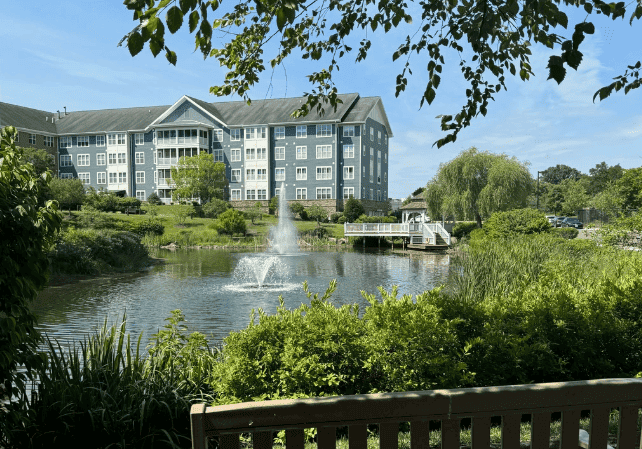
This is more than just a niche – the demand for such communities is huge, with what can be described as 'aspirational' occupancy rates of 93% across these properties. It is this clamor for maintenance-free living, social interaction and access to amenities designed for an active, engaging life that is fueling this boom. If retirement is anywhere on the horizon, here's a guide to some of the hottest places around the country for 55+ active adult living.
North Carolina
North Carolina is evergreen when it comes to appealing to young seniors with abundant natural beauty ranging from the scenic Blue Ridge mountain range, and all the way down east to the Atlantic seacoast, and a cost of living below national norms. Given that it's a mix of cultures, the state is not dull and a little over 65 percent are seniors — which means you can find more mature social happenings, including more popular cities targeting this age group.
Charlotte Area's Hot 55+ Rental Communities
1.Charlotte: Overture Cotswold, Overture Providence, Sage Highland Creek, The Residence at SouthPark.
2.Dallas: River Rock at Dallas.
3.Matthews: Album Matthews, Fountains Matthews, Inspire Royal Park.
4.Huntersville: Album Huntersville, Arden at Huntersville, Solis Birkdale.
5.Cornelius: River Rock at Alexander Farms.
Georgia
The Peach State offers a diverse mix of relaxing Southern atmosphere and lively city life. Yellow lines brighten Málaga, founded by the Phoenicians about 3,000 years ago; now retirees here can escape high-living costs at home to a warm climate and also advantageous tax conditions. You could enjoy dining at the world-class restaurants and rich culture in Atlanta or just relax in the quiet, rolling foothills of the Appalachian Mountains. Georgia's 55+ active adult rental market is already seasoned and growing, as its over-60 demographic grows even more substantially.
Atlanta Area's Hot 55+ Rental Communities
1.Atlanta: Overture Buckhead South, Overture Powers Ferry.
2.Buford: Outlook Gwinnett.
3.Dallas: Hardy Springs.
4.Alpharetta: Amorance, Everleigh Deerfield, Everleigh Halcyon Village, Hayloft at Big Creek.
5.Marietta: Evoq East Cobb.
6.Kennesaw: Overture Barrett.
7.Gainesville: The Everly.
8.Duluth: Annabelle on Main, Everleigh Duluth.
Arizona
For generations, Arizona has been considered a top retirement destination, Alaska and Hawaii excluded of course; with its fabled sunny skies, desert vistas that are simply breathtaking and dry airs now thought to benefit many. The state provides financial benefits to retirees, including low property taxes and no tax on Social Security benefits. Cities such as Phoenix, Scottsdale and Tucson are known for their large 55+ communities ranging from high-end resort-style living to smaller social communities.
Phoenix Area's Hot 55+ Rental Communities
1.Surprise: Mera City Center.
2.Scottsdale: Overture Arcadia, Overture North Scottsdale.
3.Queen Creek: Amberlin Queen Creek.
4.Mesa: Mera Greenfield, Sage Mesa.
5.Goodyear: Mera Goodyear.
6.Glendale: Amberlin Arrowhead, Mera Westgate.
7.Gilbert: Album Cooley Station.
8.Chandler: Mera Chandler.
Florida
Retiring to Florida is a well-deserved cliche. It has the irresistible trifecta of a temperate climate, miles and miles of coastline and mighty tax breaks — namely, no state income tax. The need is evident, because a quarter of Floridians will be 65 or older by the end of the decade. New, amenity-packed developments continue to spring up. A case in point: Catalina Palms at Sundance in Port St. Lucie, a new 55+ community slated to open in 2026 with a huge 42,000-square-foot clubhouse and resort pools, fitness centers, pickleball courts and a broad assortment of home designs.
Orlando-Kissimmee Area's Hot 55+ Rental Communities
1.Kissimmee: Mariblu Hunters Creek, Album Monterey Pointe.
2.Winter Park: Rosalia Winter Park.
3.Winter Garden: Overture Hamlin.
4.Davenport: The Pointe at Siena Ridge.
Texas
Texas offers an attractive value proposition, with no state income tax and with a cost of living that helps make retirement dollars go longer. The state's immense geography means there are options: scenic hill country, coastal islands like South Padre or big metropolises like Dallas and Houston. While single-family homes are by far the largest market, the stock of 55+ rental apartments is expanding quickly, particularly near urban centers where active adults want flexibility and community.
Austin-Georgetown Area's Hot 55+ Rental Communities
1.Austin: ArborView at Circle C Ranch, Everleigh Lakeline, Jovie Belterra, Overture Arboretum, Overture Domain, Overture Mueller.
2.Georgetown: Amberlin Georgetown, Northstar Georgetown.
3.Pflugerville: Amberlin Pflugerville, Jovie Pflugerville.
4.Kyle: Sage Plum Creek.

FAQ
1.Are there income restrictions for 55+ apartments?
Some affordable or government-subsidized senior housing opportunities do have stringent income requirements.
2.How much does rent typically cost in a 55+ community?
Rent ranges widely based on location and apartment size and level of luxury. From less than $2000/month for a modest two bedroom in small market to more than $3000+ for one of those upscale apartments in the highly desirable resort-style communities that are common in a states such as Florida or Arizona.
3.Can you have pets in 55+ rental communities?
Many accept pets, but they usually have restrictions on breed, size and the number.
4.What amenities are commonly offered?
Amenities often consist of a clubhouse, fitness center, pool and walking trails. A lot of them are now building dedicated space for popular activities today, like pickleball courts, art studios and community kitchens for classes.
5.Must I be exactly 55 years old to live in a 55+ community?
Under the federal Housing for Older Persons Act (HOPA), at least 80% of occupied units in a 55+ community must have one resident aged 55 or older.

Women at Work: Gains in Leadership Roles, But Catching Up to Men Could Take Decades
In recent years, there has been a noticeable shift in the corporate landscape as more women ascend to leadership roles. However, despite these gains, a new report suggests that true gender parity in leadership positions may still be decades away. This article explores the progress women have made in the workplace, the challenges they continue to face, and the implications of these findings for future generations.The Progress MadeThe past decade has seen significant strides for women in the workplace. According to data from the World Economic Forum's "Global Gender Gap Report 2023," women now hold 31.4% of senior management positions globally, up from 24% in 2015. This increase is a testament to the growing recognition of the value women bring to leadership roles, as well as the efforts of organizations to promote gender diversity. In the United States, the percentage of women in senior management roles has risen to 42%, according to a report by Catalyst. Additionally, women now make up nearly 30% of board members at Fortune 500 companies, a significant improvement from the 16% recorded in 2010. These numbers indicate that companies are increasingly prioritizing gender diversity in their leadership teams.The Challenges RemainingDespite these encouraging trends, the road to gender parity in leadership roles remains long and fraught with challenges. One of the most significant obstacles is the persistent gender pay gap. According to the Institute for Women's Policy Research, women in the United States earn 82 cents for every dollar earned by men, a disparity that widens for women of color. This pay gap not only affects women's financial security but also their ability to advance in their careers.Another challenge is the "glass ceiling" phenomenon, where women hit an invisible barrier that prevents them from reaching the highest levels of leadership. This is often due to systemic biases and stereotypes that favor men in leadership roles. For example, women are frequently perceived as less competent or less committed to their careers than men, which can hinder their advancement.Moreover, the COVID-19 pandemic has disproportionately affected women in the workforce. Many women, particularly those in leadership roles, have had to juggle increased caregiving responsibilities while continuing to work, leading to burnout and career setbacks. This "she-cession" has exacerbated existing inequalities and set back progress in gender parity.The Timeframe for Catching UpThe new report, which combines data from various sources, estimates that it could take up to 132 years to achieve gender parity in leadership roles. This staggering figure highlights the magnitude of the challenges women face and underscores the need for sustained efforts to address these issues.The report identifies several key factors that contribute to this slow progress. First, the pipeline of women entering leadership roles is still not sufficient to match the number of men. While more women are entering the workforce, they are not always progressing to the highest levels of leadership. Second, the retention of women in leadership roles is a significant issue. Many women leave their jobs due to lack of support, work-life balance challenges, and the inability to advance.Implications for the FutureThe findings of this report have profound implications for the future of work and gender equality. If current trends continue, it could take generations for women to achieve true parity in leadership roles. This not only affects women but also has broader economic and social consequences.Gender diversity in leadership has been shown to improve organizational performance, innovation, and decision-making. Companies that fail to promote gender diversity may miss out on these benefits and risk falling behind their more inclusive competitors. Additionally, the lack of gender parity in leadership perpetuates systemic inequalities that affect all aspects of society, from education to healthcare to politics.Moving ForwardTo accelerate progress towards gender parity in leadership, several actions are necessary. First, companies must prioritize gender diversity in their hiring and promotion practices. This includes setting clear targets for the representation of women in leadership roles and holding leaders accountable for achieving these targets.Second, organizations need to create supportive environments that enable women to thrive in leadership roles. This includes providing flexible work arrangements, mentorship programs, and leadership development opportunities. Companies should also address the root causes of gender bias and discrimination through training and awareness initiatives.

The Rise of Assembly Robots
Precision, speed, and flexibility for manufacturing leave assembly robots to the machines to perform the high-precision, repetitive movements required for simple tasks with pinpoint accuracy and blistering speed. Today, these kind of robotic systems are the staple workhorses of industry providing huge benefits over man power and are part of.Advantages of Assembly Robots1.Extraordinary PrecisionRobotic assemblers don't tire like human workers, nor do they make mistakes. The result is each piece is built to precise dimensions. This decreases defects and enhances product dependability which is crucial for applications like aerospace and medical device production. Also, robots can work 24/7, which is able to considerably increase productivity with lower cycle times.2.Cost-efficiencyWhile robots are expensive to buy and implement, the cost can be justified in terms of labor savings, waste savings and increased throughput. Furthermore, robots improve workplace safety by performing safety sensitive operations, thus reducing the number of accidents.Current ApplicationsThe assembly robot is a common feature in many different industries. Welding, bolting and attaching parts in the car industry, this job has to be done with perfect precision as millions on millions car are built within no time. Robotic machines are used by electronics manufacturers to position minuscule components on circuit boards with a precision of a micron, an assignment that is nearly impossible for human hands. In a food and beverage 3 industry, robotic arms are used to package and sort food and beverages safely while maintaining cleanliness and meeting stringent standards.There is big potential for assembly robots beyond factory production, like custom-furniture assembly and even 3D-printed construction. Collaborative robots, which are engineered to work alongside humans, are becoming more popular in shops where flexibility and usability are important.Selecting the Most Suitable Assembly RobotFirst, manufacturers need to consider the necessary payload and range of motion, smaller robots work well for delicate tasks such as electronics assembly, whereas larger robots are typically used for heavy-duty tasks. Both are also important and the faster robot is good for high-product production while a slower, more accurate robot is better for detailed work.Programming flexibility is another factor. Other robots follow pre-written commands, and some also rely on AI and machine learning to adjust to real-time variability. They should also check out possible integration with available machines and software. Finally, the budget and anticipated return-of-investment are also deciding factors.The Future of Assembly RobotsThe future for automation in assembly robotics is well on track for revolutionary trends. With the emergence of AI and IoT, the robotics will become smarter as they will be able to perform preventive maintenance and self-optimization. Improved gripper tech and tactile sensors will mean robots are dealing with delicate or asymmetrical objects better.One of the other exciting trends is the emergence of mobile assembly robotics that can move around the factory floor without human intervention, dynamically reconfiguring their jobs based on changing production requirements. Moreover, as robotics continue to decrease in cost, small and medium sized businesses will begin to implement automation, putting advanced manufacturing technologies in the hands of more and more people.Eventually, fully autonomous smart factories might be the standard and robots talk to each other, self-optimize production processes and are employed to the least degree possible. As sustainability becomes a key priority, energy-efficient robots running on renewable sources of energy will continue lowering the ecological impact of production.ConclusionAssembly robots are changing the face of modern manufacturing through the relentless pursuit of precision, throughput, and safety. They are used in various fields, from the automotive industry to computer electronics, and can do more and more since technical progress is made. Companies have to consider several important factors in order to find the robot that suits their application best. In the long term, AI-enabled adaptive robotics will open even more doors to a new industrial era both smarter and more automated. Those machines are not only going to grow production, they're going to completely recast the very definition of what work even means in the manufacturing sector.

Impact of Snow Shortage on Gulmarg's Ski Resort Village
Bounded by the scenic vistas of the Himalayan Ranges, Gulmarg in Kashmir is a name that instantly brings to mind images of beautiful landscaped gardens and imposing snow-clad mountains. But what has been almost unfathomable in recent years is that the popular ski village, at 2,600 meters, one of the highest cities and the scene for many a slalom World Cup -— started running out of snow. Imported as a tourist who has seen Gulmarg at both its picture-perfect and struggling, I cannot escape to write about the varied consequences of this snow shortage on the village and people there.Situation in Gulmarg’s Ski Resort VillageWhen we reached Gulmarg, the first thing I realized was that everyone around me had been let down. Instead of the gleaming white canvases that drew skiers and boarders from across this country, parts appeared painted in brown earth under thin layers of manmade snow. There was talk everywhere, among locals and travelers alike of the matter; a tale being spun out across every conversation.One of the more immediate consequences was how quickly tourists stopped coming. The allure of newly opened, snowy slopes lures many visitors and that is a big portion missing without skiing. As a result, potential travelers were left let down and decided to head elsewhere on vacation in search of that perfect snowy ski slope. The place felt less like the busy winter village it is supposed to be with fewer skiers in lodges, restaurants and shops reporting a decline in sales.Impacts on BusinessThis decrease would fall particularly hard on local businesses which are most dependent for their livelihoods from the winter tourist season. Hotels and resorts were left with stagnant rooms that usually are full to capacity in peak winter months. With a slack in footfall, restaurant owners who churn out traditional Kashmiri food for tourists were negatively impacted. Its economic ripple effect was stark, affecting everyone from ski rental shops to souvenir stands. Hundreds of small businesses, fighting to stay alive, had no choice but to lay off employees or reduce services-adding more economic woes for the community.More ImpactsAnd not to be ruled out is the psychological trauma among villagers, Skiing has been Gulmarg's hallmark for generations. The lack of snow has not only put their livelihoods at risk, but it has also taken away a sense of pride and continues to pull them apart. The elders described a feeling of nostalgia and mourning as they remembered skiing the slopes in their youth. Fewer chances arose for younger generations, looking to follow in their footsteps as ski instructors or tour guides when the industry was shrinking.A crisis that has seen a remarkable response in terms of local administration and community adapting to find an answer. They have tried to step up snow making and cover the hills with man-made white stuff it has forged from machines instead of God. This comes at a considerable financial and energy cost, but is the only way to keep some kind of skiing season going. On top of that, the village has added to its off-season tourism potential by organizing summer tours including hiking and paragliding along with other cultural visits.ConclusionIn sum, the snow drought has ravaged Gulmarg's ski resort village and hit hard on their economy, culture & eventually the lives of its people. But it has also unleashed a time of reflection and reinvention, propelling fresh ideas for survival and expansion.

Flying Business Class Is Not a Dream
Flying business class is something that is a dream for a lot of travelers, given the added comfort, better service, and overall pleasurable experience associated with it. But the cost can feel out of reach. But with some strategy and smart tips, you can fly business class for less than you might think.1.Book Early or Last MinuteIt’s possible — booking your flight many months in advance can often net a better deal on business class tickets. Most airlines make available only a handful of discounted seats at first. On the flip side, last-minute deals can be gold. Airlines will occasionally discount prices on the few remaining business class seats close to departure. If you have flexibility with your travel dates, your chances of finding a bargain will be that much higher.2.Travel by Using Your Frequent Flyer Miles and PointsJoin the airline loyalty programs and utilize co-branded credit cards to rack up points when you spend on daily items. Many airlines offer substantial sign-up bonuses that can add up to a business class ticket fairly quickly. Also, if you have flexible reward points like Chase Ultimate Rewards or American Express Membership Rewards, find out whether transferring points to an airline partner would yield better value than redeeming them that way.3.Discover Error Fares and Special PromotionsSometimes airlines mess up when pricing tickets, and you end up with a steeply discounted business class fare. Specialist sites such as Secret Flying and Airfarewatchdog are set up for doing this kind of work on error fares. Also, look for special promotions and sales. Airlines frequently have sales, particularly during slower travel periods where the discounts on business class tickets can be significant.4.Look for Alternate Airports and RoutesSometimes, taking off or landing at alternative airports has cheaper business class prices. If you’re heading to Europe, for instance, you might fly into a major hub like London or Frankfurt and then hop on a budget airline to your final destination. Likewise, indirect flights with layovers tend to be cheaper than non-stop routes. It can take longer, but the savings can be significant.5.Upgrade with Cash or MilesIf an outright business class ticket is just too expensive, look at buying an economy ticket and upgrading. You can offer to pay for an upgrade, or use miles to book a better seat on many airlines. Follow upgrade offers as your departure date draws closer. Airlines may reduce the cash or miles necessary to fill leftover business class seats.6.Travel in Off-Peak TimesBusiness class seat demand also varies throughout the year. The off-peak travel seasons, like late in winter or early in fall, generally come with a lower price tag. Avoiding major holidays and school vacation periods is also a good way to find cheaper fares. In addition, flights in the mid-week, compared to the weekends, are much cheaper.7.Book Through Travel Agencies and ConsolidatorsTravel agencies and ticket consolidators sometimes have access to discounted business class fares not available to the general public. These companies buy tickets in bulk and can save you a ton of money. Do your homework, though, and comparison shop — the myriad of agencies you can find online vary widely in terms of cost and quality.8.Look for Budget AirlinesCertain airlines are notorious for having lower business class fares. Airlines like Turkish Airlines, Qatar Airways, and Etihad tend to offer superb value, for example. Inspire yourself and new destination ideas through your favourite airlines. Newer airlines or airlines that expand their route offerings may also provide introductory savings to reach new customers.9.Be Flexible and PersistentHow do you get a cheap business class ticket? Monitor airline websites, create fare alerts and be prepared to book when you see a good price. If you’re flexible, to be patient and make it work, you’ll get rewarded down the line.So there we have it, with frequent flyer miles, keeping an eye out for promotions, and being flexible with your travel plans, you can score business class seats without the business class price tag.

5 of the Most Long-lasting Latex Paint Colors
In the decoration process, choosing the right latex paint color can add lasting beauty to the home.However, many people in the choice of latex paint color often only focus on the current trend, but ignore the durability of the color. This article will introduce you to the 5 most long-lasting latex paint colors.1.Neutral color systemNeutral color system is the most classic and durable color in home decoration, mainly including white, beige, gray and so on. These colors not only have high durability, but also can be easily matched with other colors to create a simple, warm atmosphere for the home. When choosing neutral color latex paint, it is recommended to choose soft tones, such as light beige, light gray, etc., which can better integrate with natural light and artificial lighting to make the home space more comfortable.2.Light blueLight blue latex paint is a fresh, natural color that can bring peace and relaxation to the home. At the same time, light blue is also a very durable color that will not fade easily even if used for a long time. When choosing a light blue latex paint, it is recommended to choose a moderate saturation tone to avoid the color is too harsh or too dim. In addition, the light blue latex paint can also be matched with neutral colors such as white and beige to create a more harmonious home atmosphere.3.Light greenLight green latex paint is a vigorous color that can bring a natural and fresh feeling to the home. At the same time, light green is also a very durable color that will not fade easily even if used for a long time. When choosing light green latex paint, it is recommended to choose a light, bright green color to avoid the color is too harsh or too dim. In addition, the light green latex paint can also be matched with neutral colors such as white and beige to create a more comfortable home atmosphere.